Our models minimize prediction error by modulating the activity of metabolic pathways
Mechanistically model intracellular processes using simplified representations.
Fails to capture all the complexity
Statistically infer behavior from observations using AI.
Not constrained to biological feasibility
We use a hybrid approach.
We map a genome-scale metabolic model (GEM) onto a stoichiometry reaction matrix, allowing us to incorporate metabolic knowledge into the AI learning process.
Where others estimate process rates directly from data, we indirectly learn them through metabolic modulation, ensuring our predictions are metabolically feasible.
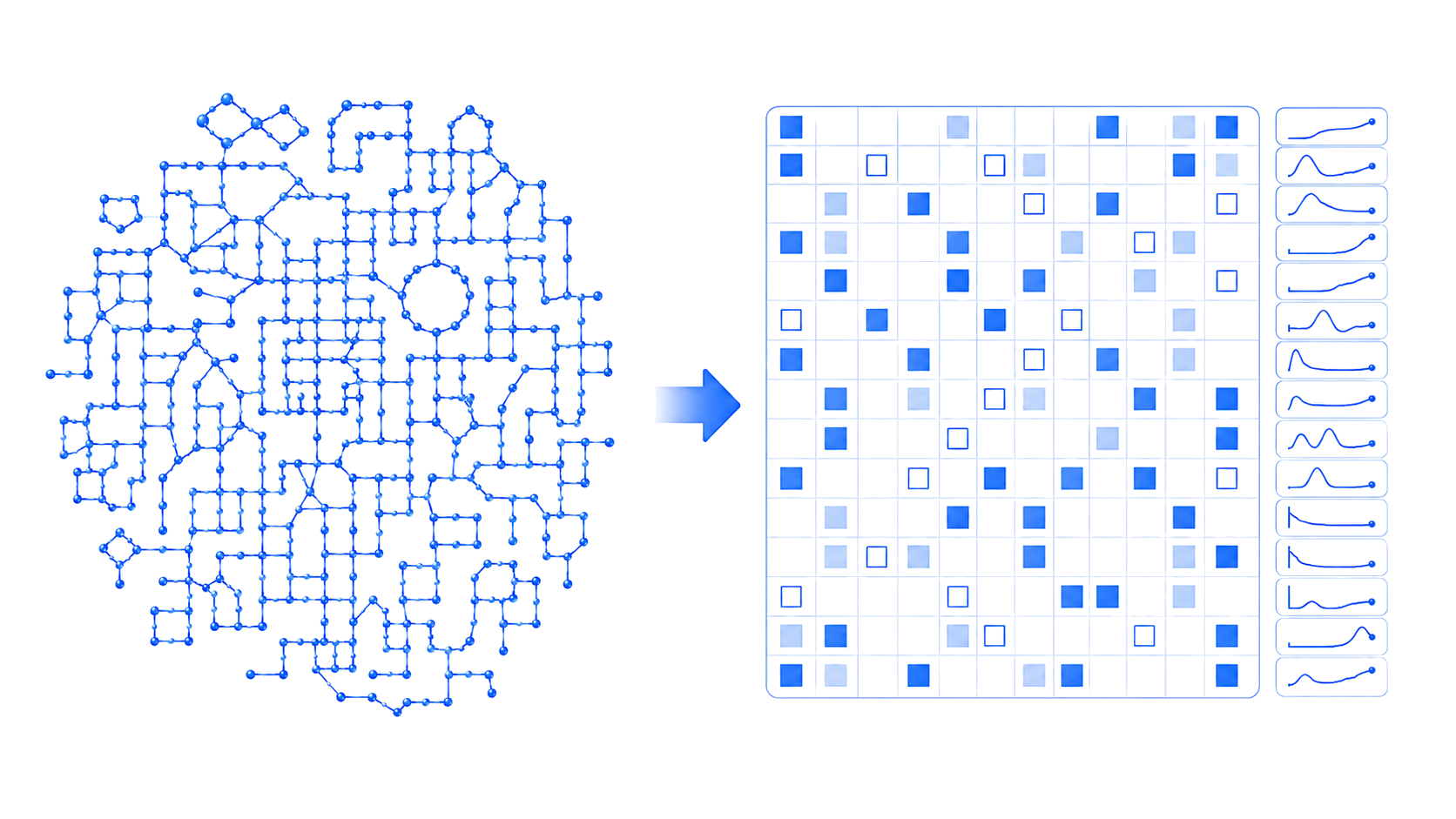
Reduce the solution space
The degrees of freedom in genome-scale metabolic models (GEMs) are typically too high to model directly. We reduce the solution space without sacrificing accuracy by decomposing the GEM into minimal metabolic functioning units.
Learn by modulating metabolic units
The AI learns to reduce prediction error by modulating the activity of these minimal metabolic units.
Assemble the digital twin
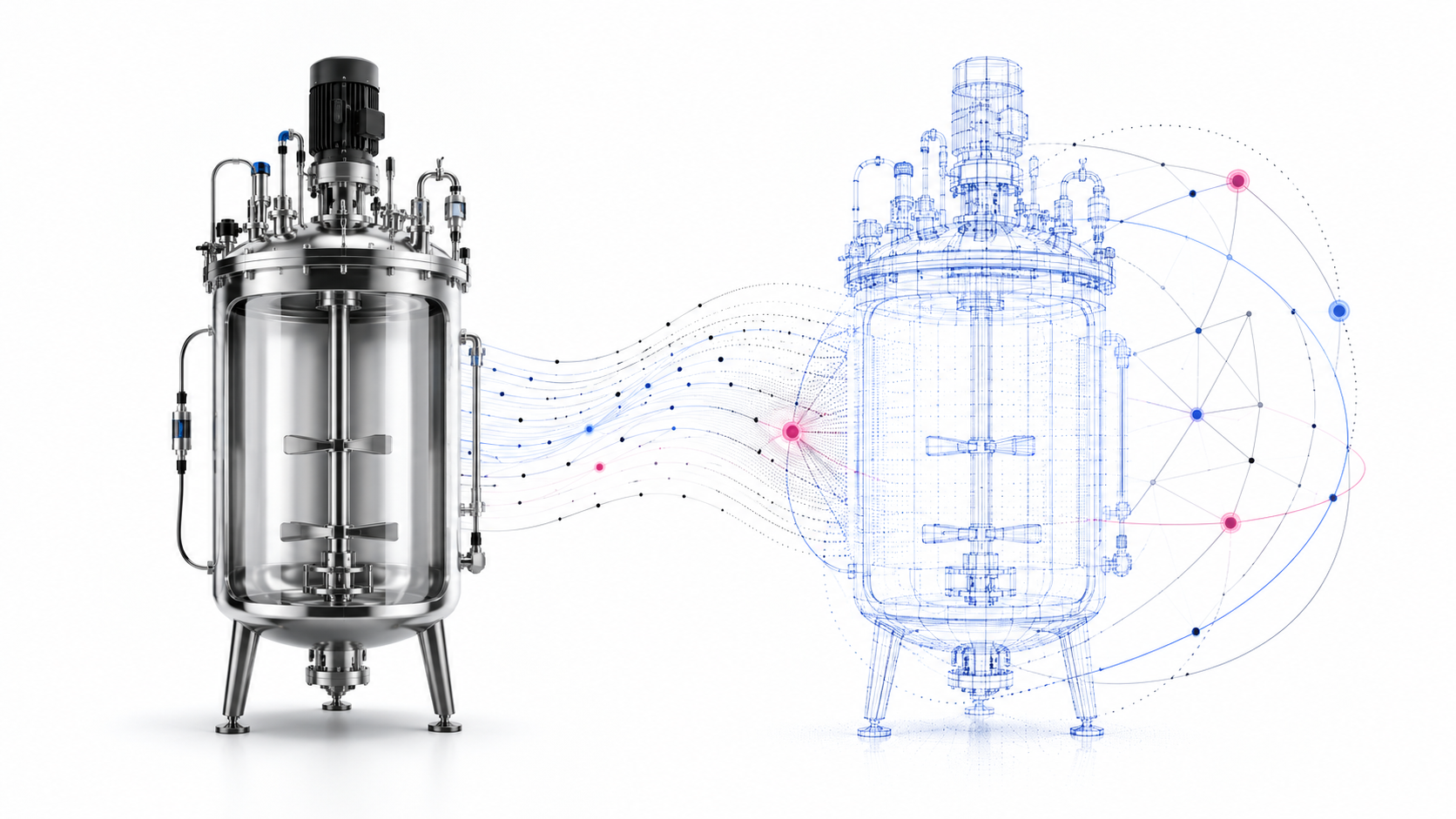
We combine this core engine with other modules that model reactor characteristics, influxes and outfluxes, and extracellular reactions. Together, these make up our digital twin.
-
Mammalian Cells
 Chinese hamster (CHO) (Ovarian)Mus musculus (n.s.)Homo sapiens (Hepatic)
 -
Microbial CellsActinoplanes friuliensis (n.s.)Bacillus methanolicus (MGA3)Bacillus subtilis (168)Clostridium acetobutylicum (ATCC)Corynebacterium glutamicum (ATCC)Escherichia coli K-12 (MG1655)Lactobacillus johnsonii (NCC)Lactobacillus plantarum (WCFS1)Pseudomonas putida (KT 2440)Sinorhizobium meliloti (1021)Streptomyces coelicolor (A3(2))Streptomyces collinus (Tü365)Xanthomonas campestris (ATCC)Candida albicans (SC5314)Saccharomyces cerevisiae (S288C)